Showing posts with label SS. Cyril & Methodius. Show all posts

Tuesday, October 30, 2018

SS. Cyril & Methodius Seminary (Orchard Lake)


Fr. Leopold Moczygemba, a Conventual Franciscan and one of the first Polish priest in the U.S., petitioned the Vatican to establish a seminary in the United States. Pope Leo XIII granted approval on January 14, 1879, and Fr. Moczygemba began fundraising but had to resign due to illness. Fr. Józef Dąbrowski was soon assigned to bring the plans to fruition. Fr. Dabrowski was also pastor of St. Albertus Parish and integral in bringing Felician Sisters to Detroit in 1874.

The Felicians built a motherhouse and Guardian Angels Orphanage at Canfield and St. Aubin, a block north of St. Albertus Church. Immediately north of that, land was purchased for the Polish Seminary School of Saints Cyril and Methodius. Bishop Stephen Ryan, Diocese of Buffalo, blessed the cornerstone on July 27, 1885. Bishop Borgess and Fr. Dabrowski were present for the ceremony. SS. Cyril & Methodius was the first seminary in Michigan and the only seminary in the U.S. dedicated to educating foreign-born seminarians.
A plaque at the Orchard Lake campus depicts the first two rectors.
The cornerstone of the original seminary building is at the bottom.

Fr. Dąbrowski died from a stroke in February of 1903 but the seminary continued to grow under the direction of Fr. Witold Buchaczkowski. Around the same time, in 1908, Michigan Military Academy in Orchard Lake closed due to bankruptcy. Taking advantage of this opportunity, Fr. Buchaczkowski moved the seminary to the 125-acre campus on the shore of Orchard Lake. 
 

The seminary restructured in 1927 and separated into three schools: S.S. Cyril and Methodius Seminary, St. Mary’s College, and St. Mary’s Preparatory. St. Mary's College closed in 2002 but the other two remain active.

A Marian Grotto was added in the 1940s.
 

The former seminary building in Detroit was demolished at an unknown date and a playground on the site was named in honor of Fr. Dabrowski.


The Chapel of Our Lady of Orchard Lake was constructed in 1962, at the center of the campus, and has a capacity of 750.

Our Lady of Orchard Lake, with the school emblem on her chest, is suspended on the front facade of the chapel.


The prominent features of the chapel are inflexed arch ceiling and roof. 

A depiction of the Last Supper stands being the altar and around the tabernacle. An inverted arch reredos stands in front of a stained-glass wall.  

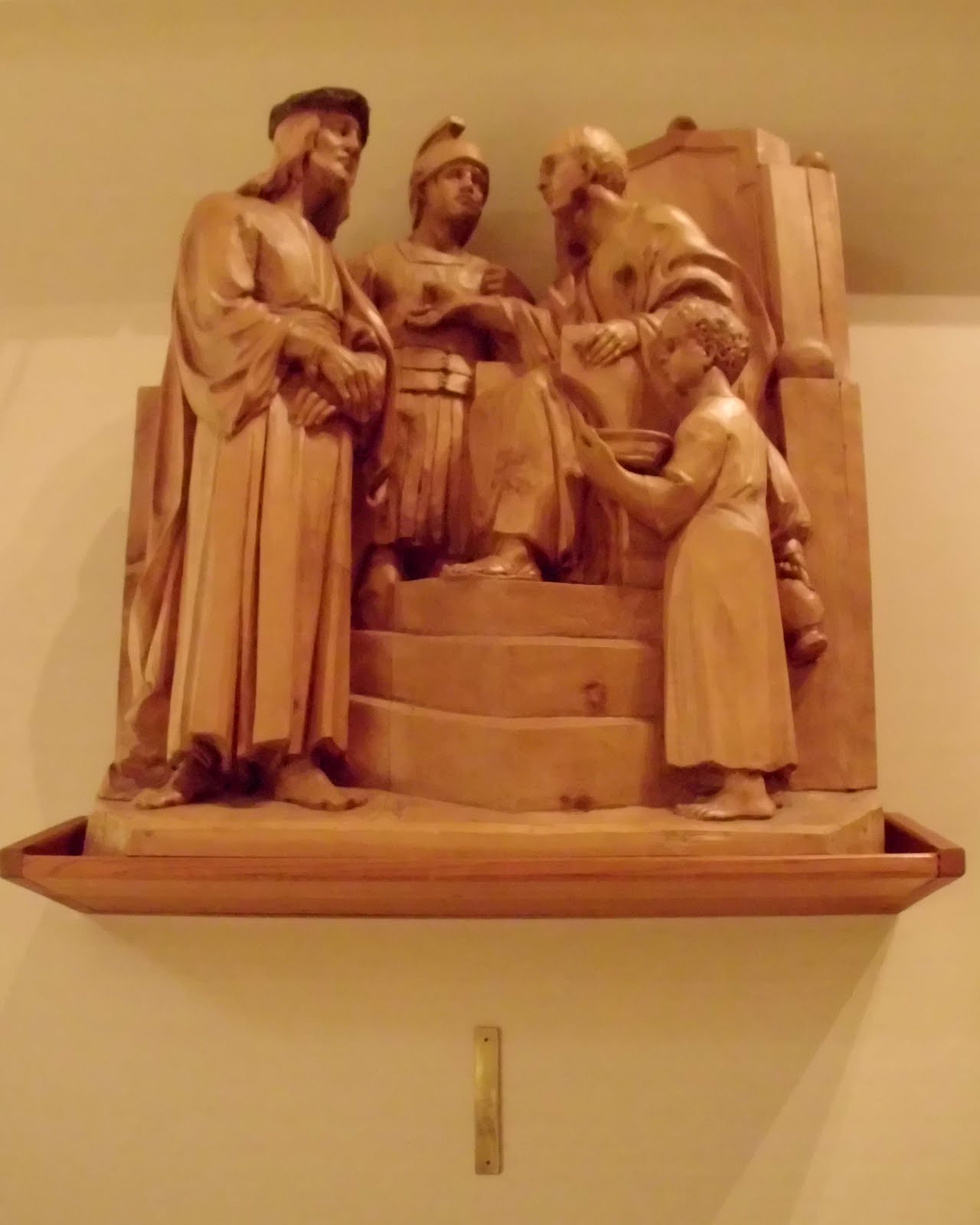
Stations of the Cross are likely salvaged from an older chapel.


Blue, green, and yellow stained-glass windows are seen throughout the exterior walls of the chapel.


Pope St. John Paul II visited Orchard Lake twice as a cardinal, in 1969 and again in 1976. A kayak used by the saint during his first visit is displayed in the vestibule of the chapel.

The chapel hosts the Archdiocesan Shrine to St. John Paul II. It features a portrait of JP2, a relic of his blood, his surplice, and an image of Our Lady of Częstochowa.

The campus is also home to The Polish Mission, a group that preserves and promotes Polish and Polish-American culture, tradition, and history for present and future generations. The grounds also include The Galeria. This 19th century building was designed to look like a castle, was later used as a chapel, and currently is a museum for Polish art and culture.


Adam Cardinal Maida is an alumnus of St. Mary's Prep. Fr. Miroslaw Krol, a native of Poland and graduate of SS. Cyril & Methodius Seminary, has been chancellor of the Orchard Lake Schools for the last year.

More info: seminary website + high school website + Polish Mission
News articles: Catholic News Service + The Oakland Press

Thursday, January 18, 2018

Ss. Cyril & Methodius Slovak Parish

Slovakian emigrants established SS. Cyril & Methodius Parish in 1918. The first church was built at the intersection of Heintz and Foster Streets, near Mt. Elliott and Harper, on the east side of Detroit.

The parish quickly outgrew the original church and sought to build a larger, new church. Fr. Joseph Zalibera, who would serve as pastor for 39 years, led the capital campaign and construction efforts.

 The cornerstone of the edifice was laid in 1925 and the first Mass was on All Saints' Day, 1926, in the basement of the new church. Three hundred students were enrolled in the parish school that academic year.

Construction was not completed until Christmas Eve of 1929. A four-story school surrounded the church while a combination gymnasium/auditorium occupied the basement of the Byzantine-style church.
 

A pipe organ was installed in 1936 and Centerline Street, in front of the church, was renamed Saint Cyril Street. A parish high school was eventually built in 1945.
 

Both the elementary and high schools closed in 1971 and the parish petitioned the archdiocese to move to a new location. Permission was granted and the parish bought land at 18 Mile and Ryan Roads. Construction of the current edifice was completed in 1988 and the parish made the 13-mile move north to Sterling Heights.

The former SS. Cyril & Methodius Church was sold a Baptist congregation and occupied until the late 1990s. By 2000, all of the former buildings of the parish were abandoned, vandalized, and in disrepair. The City of Detroit sought to clear the desolate neighborhood to make room for an industrial park so, in early 2003, the former SS. Cyril & Methodius Church was demolished.
The former rectory, as it appeared in 2006, was later demolished - Source

SS. Cyril & Methodius Parish celebrates its centennial this year. The parish will celebrate the anniversary with, among other things, a monthly Rosary in Slovakian and English. They are also in the process of gathering documents and artifacts from the parish history and will likely have some sort of exhibit later this year.

Outdoor Stations of the Cross stand across the parking lot from the current church.
 

An (Perpetual)Adoration Chapel is located near the main entrance, along with a set of four(five?) confessionals. The parish offers Reconciliation 30 minutes before each Mass and after the 9:00am Saturday Mass.

The parish patrons stand in the vestibule and, nearby, St. Francis of Assisi consoles Our Crucified Lord.
 

The Last Supper is depicted in the cryroom window.

Stained-glass windows divide the nave and vestibule.
 

Short, narrow windows line the walls near the altar.
   

The Holy Family stands at the left side of the church, near the organ.

The Sacred Heart of Jesus as well as St. Anne and Child Mary stand in corners of the nave.
 

St. Rita and the Infant of Prague stand in a back corner of the church; an icon and relics of the parish patrons in the chapel.
 

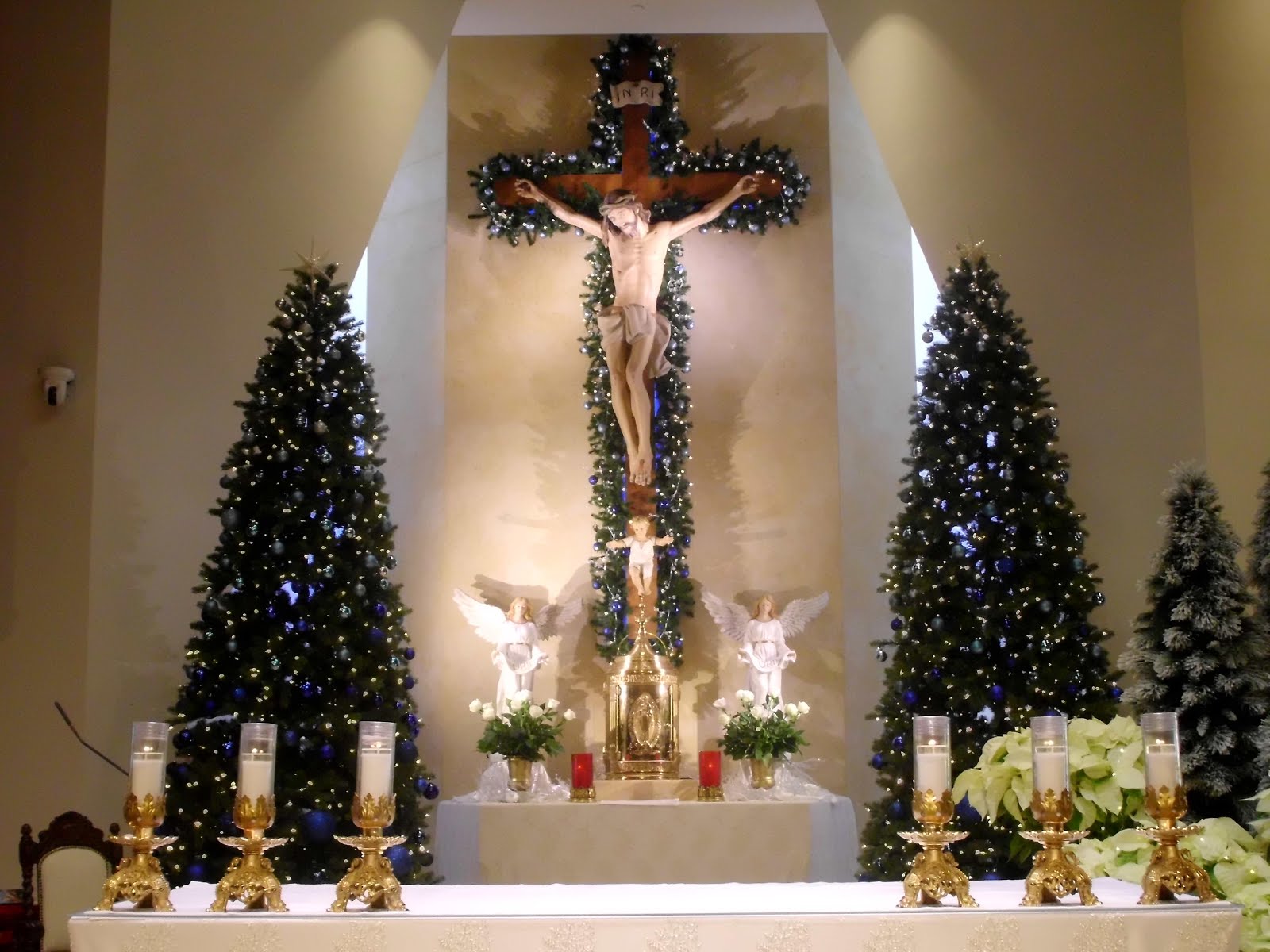
The parish follows the eastern European tradition of keeping Christmas decorations up until the Feast of the Presentation on February 2nd.

A large crucifix outside the main entrance; Guardian Angel and child outside the social hall.
  

St. Anthony of Padua stands in the hallway that connects the church and Fr. Mikus Hall. Our Lady of Fatima and the Angel of Portugal also stand in this hallway.
 

The Pieta rests outside the Fr. Mikus Hall.

A map of Slovakia hangs on the wall opposite the hall entrance.

Fr. Libor Marek was appoiunted pastor last July. He replaced Fr. Ben Kosnac, pastor for 15 years, after Fr. Kosnac was sent back to Slovakia at the end of April.
 

Fr. Marek is assisted by three permanent deacons, a priest-in-residence, and several weekend assistants.


More info: parish website
More about the early history of the parish: Forgotten Detroit + Facebook
Photos of the demolition: Discuss Detroit forum