The plans for St. John’s Provincial Seminary were conceived in 1936 but, delayed by World War II, construction did not begin under a decade later. Under the direction of Cardinal Mooney, St. John’s was designed with Romanesque archways, wide-open spaces, and a grand bell tower. Classes began in 1949 and St. John’s soon became the primary graduate-level seminary for training parish priests in Michigan. Seminarians even built their own golf course, Mission Hills, on the seminary grounds. They moved the rocks, dug the dirt, mowed the grass, and maintained the grounds. In order to play the course, a seminarian had to work at least 60 hours per year on maintaining the course.
A 1960 postcard shows an aerial view of the seminary
For the first few decades, St. John Provincial Seminary averaged about 200 seminarians. Enrollment dropped dramatically in the 1960s and 70s, to the point that the St. John's housed 20-25 seminarians per academic year. To help balance the budget, the golf course was leased to a for-profit manager and the public was permitted to access the greens starting in 1979. Eventually, due to low enrollment and high overhead costs, St. John Provincial Seminary closed in 1988 and was put up for sale. Graduate-level seminarians then moved to Sacred Heart Major Seminary, which was previously a minor seminary for high school and undergraduate studies.
In 1990, Archbishop Maida began planning the long-term use of the site and to repurpose the facility for the archdiocese. He was made a cardinal two years later then, in 1996, St. John’s Center for Youth and Family opened. The retreat house operated for more than a decade before it was suspended by the archdiocese because of low attendance.
The site was renovated to become a banquet and conference center. At the same time, the golf course was expanded and improved. The three courses are named after evangelists: Matthew, Mark and Luke. Of course, the entire complex is named after St. John. The archdiocese has not subsidized general operations at the site since late 2009.
The chapel has become a popular place for weddings and ceremonies in the chapel must be according to the Catholic Rite. Revenues from a hotel, conference center and golf course on the property provide enough funds for the archdiocese to maintain the property and to provide a subsidy to its wedding ministry. A balcony that overlooks the chapel, which was once likely used by the rector of the seminary, is now used a bridal suite and private dressing room.
Our Lady of the Rosary and St. Joseph stand outside the main doors to the chapel.
Like many seminaries and monasteries, the chapel features antiphonal seating for group prayer such as the Divine Office/Liturgy of the Hours.
Bronze Stations of the Cross line the walls of the nave.
Contemporary stained-glass windows are likely to be replacements from the 1970s.
Christ the Eternal High Priest is depicted above the altar.
The tabernacle stands in the right transept. An inscription here recalls the words of Our Lord to St. Margaret Mary Alacoque: "Behold the Heart that has so loved men that it has spared nothing, even to exhausting and consuming Itself, in order to testify to Its love; and in return, I receive from the greater part only ingratitude, by their irreverence and sacrilege, and by the coldness and contempt they have for Me in this Sacrament of Love. But what I feel most keenly is that it is hearts which are consecrated to Me that treat Me thus."
A statue of the Blessed Virgin Mary stands in the left transept; view of the open truss ceiling.
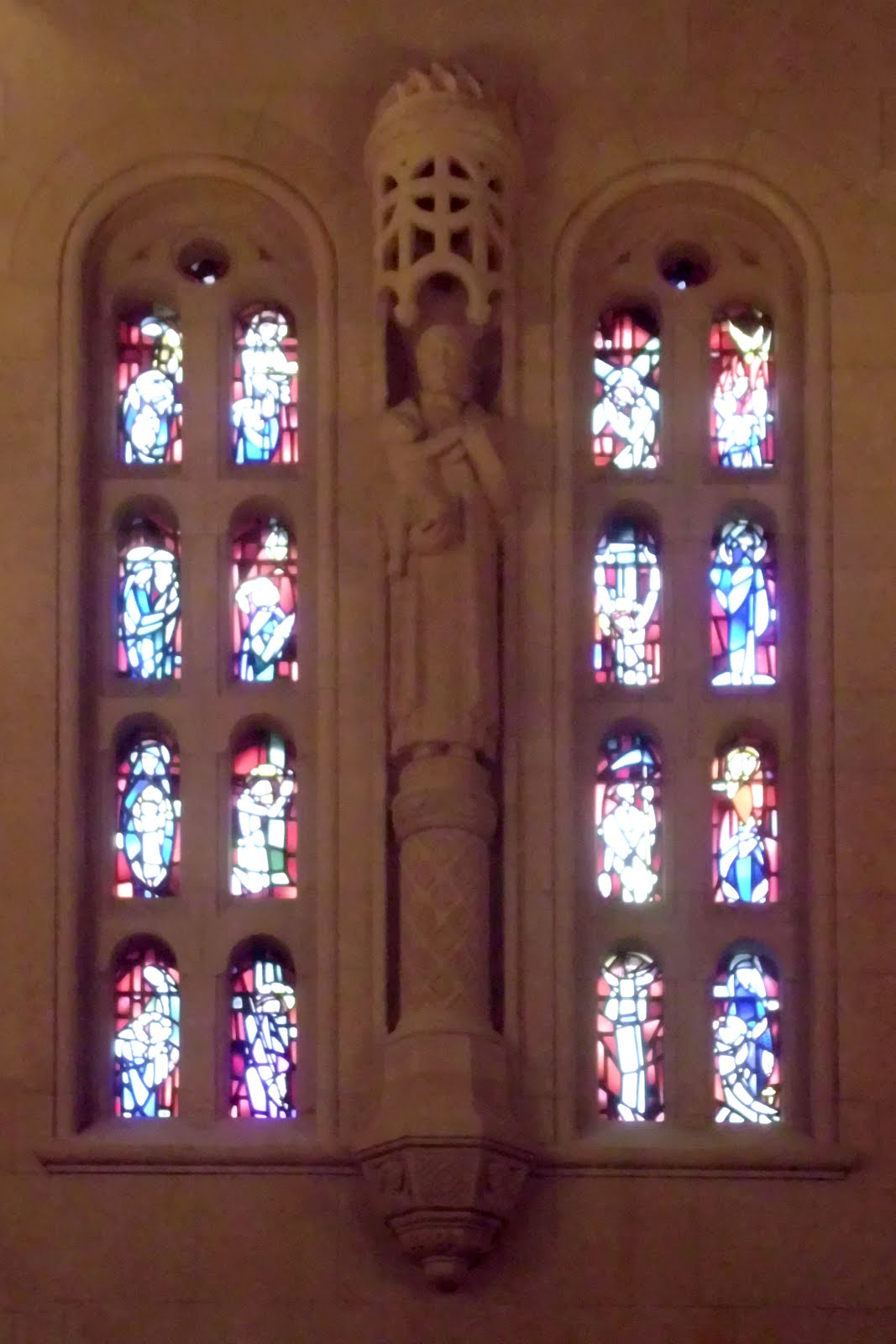
Statues and small, stained-glass windows over each transept.
In 1930, Passionist priests and brothers established a monastery in Detroit. They quickly began offering retreats for laity and a formal retreat house was established in 1948.
The main entrance of the original monastery, now owned and operated by the Orthodox Church - Source
A modern retreat house was built in 1960 with 85 guestrooms.
A postcard shows an aerial view of the retreat house shortly after it opened. - Source
St. Raphael of Brooklyn Church, formerly the Passionist chapel - Source
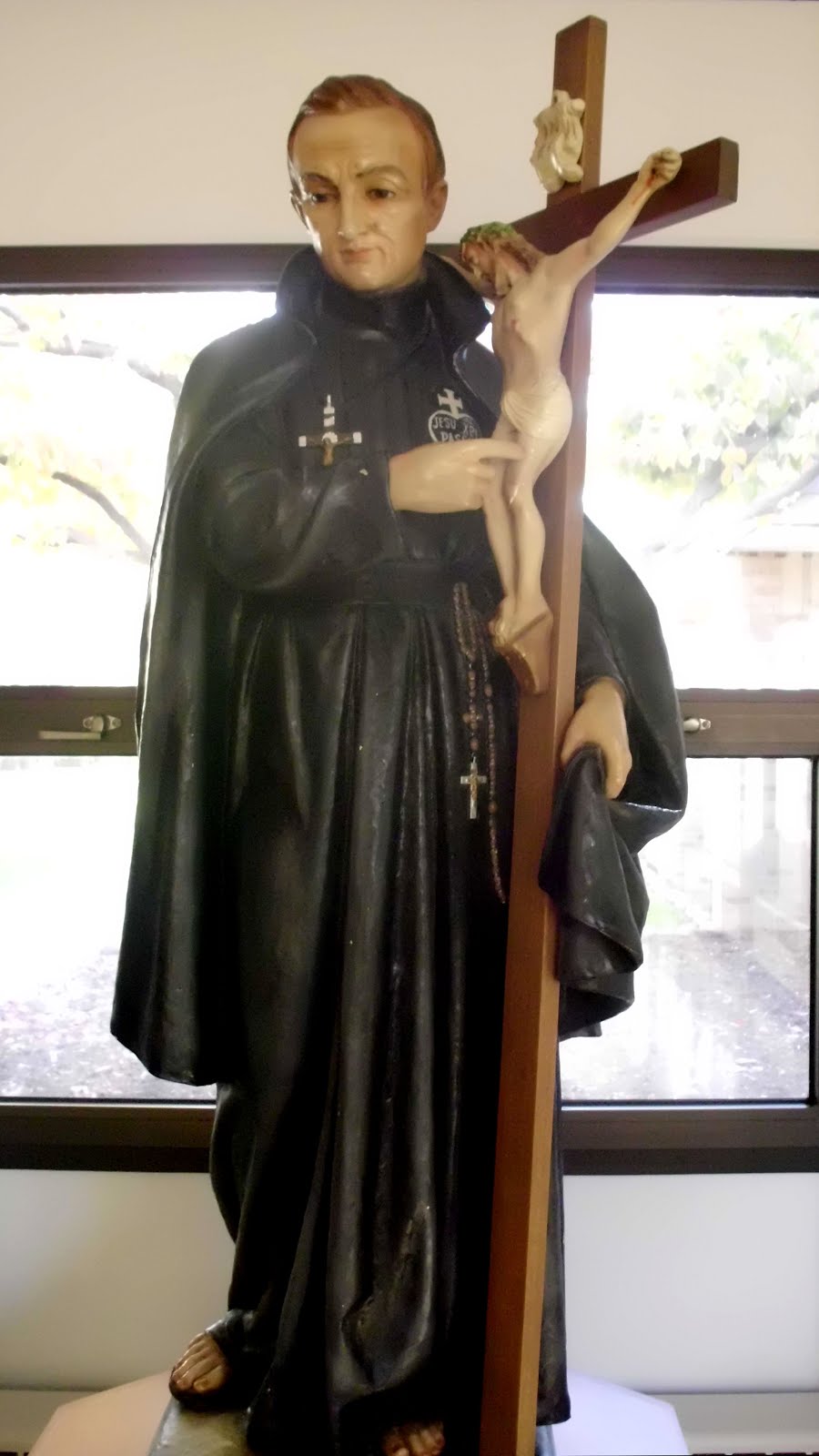
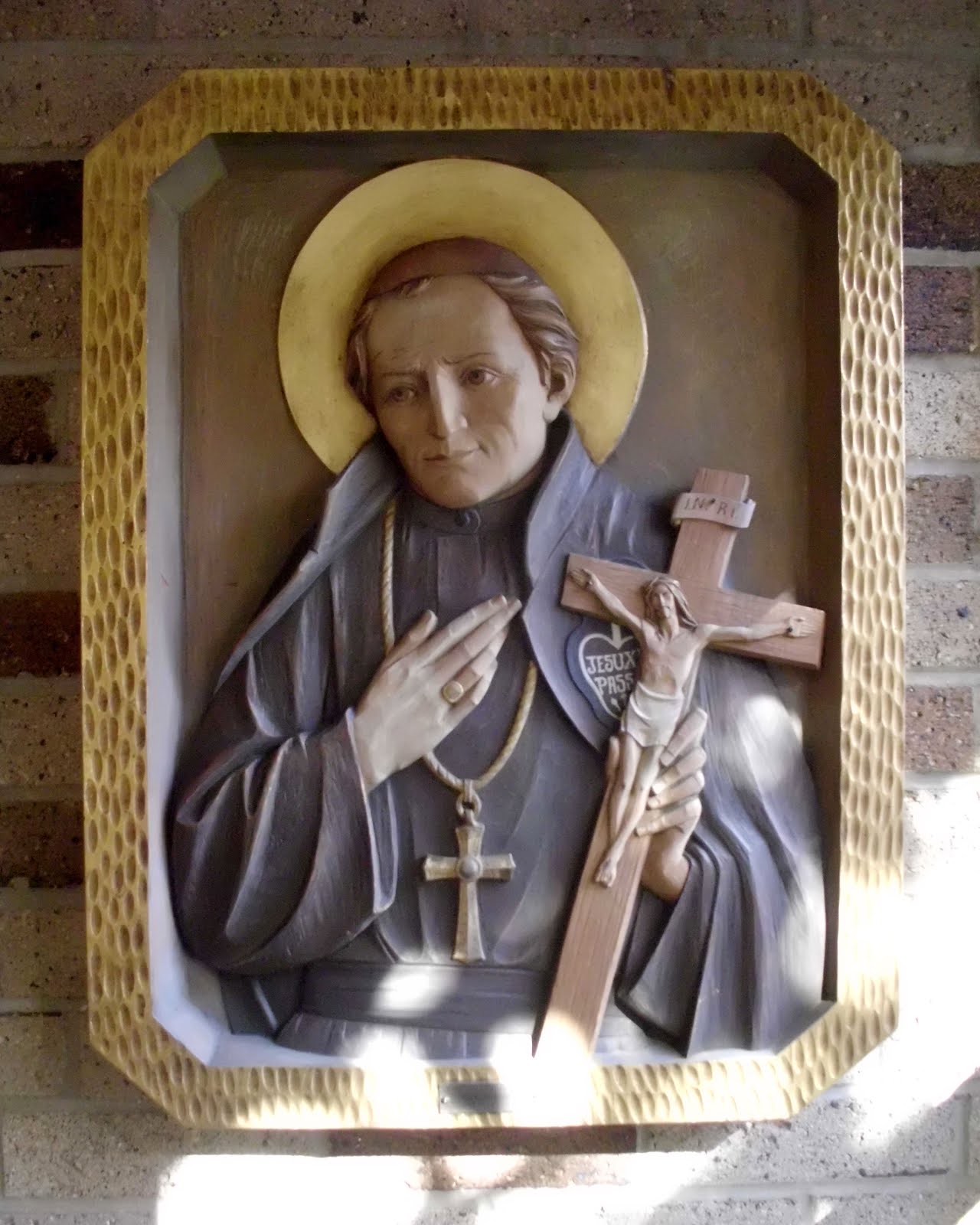
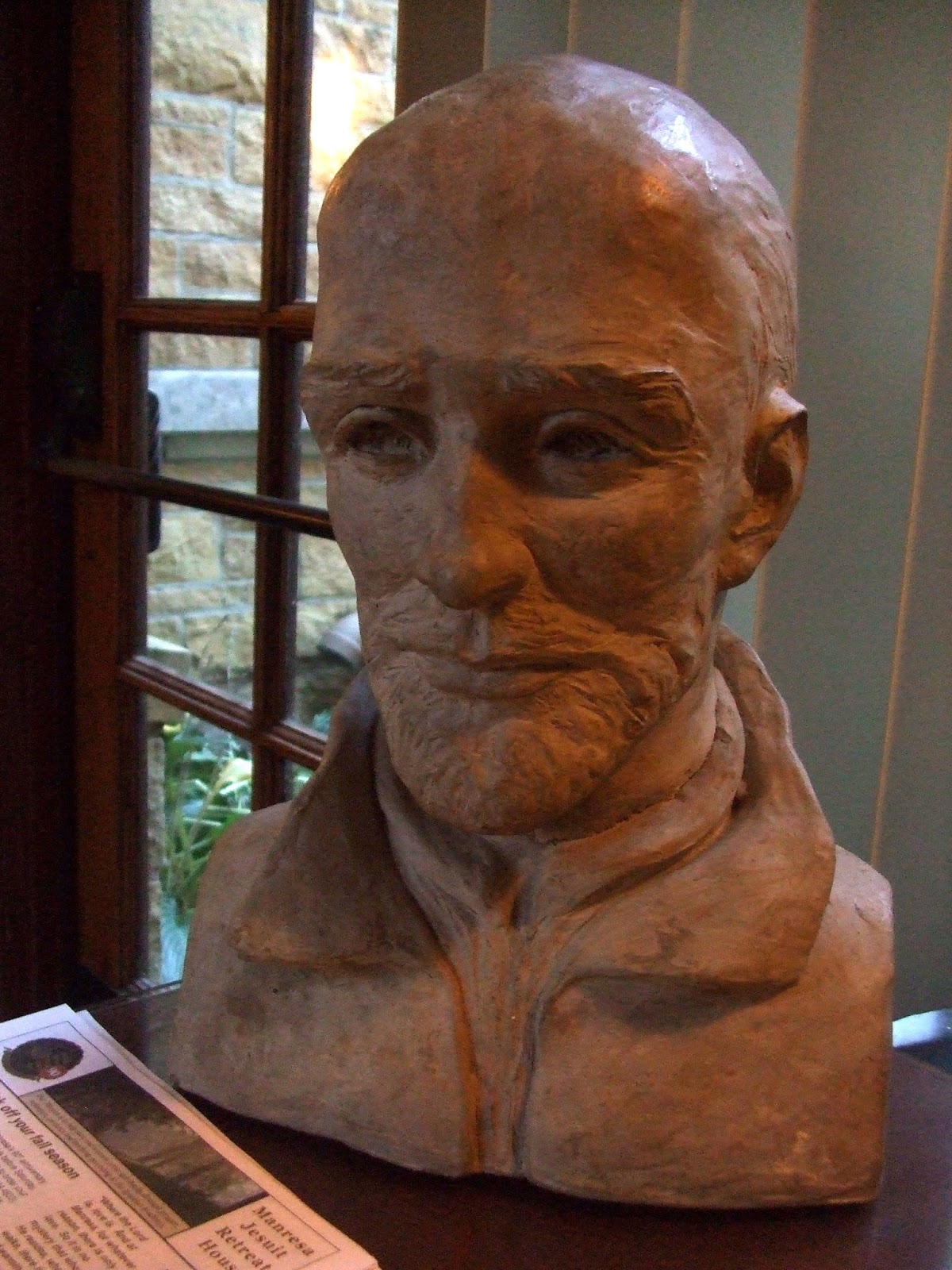
A statue of the namesake, founder of the Passionists, stands outside the gate along with the Passionist emblem. Another statue of the namesake stands outside the chapel.
Five Passionists live next door in a newer monastery. They host weekend retreats as well as abbreviated, single-day or evening retreats and many other events.
There are three wings of guestrooms, one is named after St. Joseph while the other two are named after Passionist saints, St. Paul of the Cross and St. Gabriel of Our Lady of Sorrows, respectively.
St. Thérèse of Lisieux stands near a doorway; Our Lady of Częstochowa above one of the chapel's many side altars.
The chapel is very triangular with it's gable roof and ceiling as well as triangular tabernacle.
The Blessed Virgin Mary and St. Joseph with Child Jesus are suspended at the sides of the santuary.
Resurrected Christ and an inscription of John 8:11 on the back wall of the chapel.
The Stations of the Cross line both the interior as well as exterior walls of the chapel.
The retreat center includes two acres of trails behind the chapel.
St. Joseph and Sacred Heart of Jesus stand among the trails.
Like many monasteries, an open square is located in the middle. This square features religious statues, a water fountain, benches and dining tables.
A large cross stands at the edge of the square, towering over the retreat house; another large cross, kneeler and 12th Station at the back of the chapel.
The Detroit Passionists are under the direction of the Holy Cross Province, based in Illinois.
St. Paul of the Cross Passionist Retreat Center stands on the far west side of Detroit, very close to Redford Township. It's on the south side of Schoolcraft Rd. (I-96/Jeffries Fwy.), in between Telegraph Rd. and W. Outer Drive.
During the late 1910s and early 1920s, laymen from the Detroit area frequented St. Stanislaus Retreat House (now Jesuit Retreat House) in Cleveland, Ohio. In 1923, they established "The Laymen's Retreat League" to build a Jesuit retreat house in the Detroit area under the direction of Fr. John Donoher, SJ. They purchased land in modern-day Grosse Point Park but, after struggling to build a retreat house, they began to look for a new location. Fr. Donoher died in 1925 and and Fr. William Cogley, SJ, replaced him as chaplain.
St. Ignatius of Loyola being tempted by Satan, a statue outside of Cleveland's Jesuit Retreat House - Source
In March, 1926, the Edsel Ford Estate purchased the Grosse Pointe Park property. The group then bought William Murphy's 39-acre "Deepdale Estate" in what was mostly a farming area. The location, on the northwest corner of Woodward Avenue and Quarton Road, in what is now the southeast corner of Bloomfield Hills. The location was ideal for their needs as it was central to Detroit and Pontiac and easily accessible. With the approval of the Provincial of the Chicago Province, Fr. Jeremiah O'Callaghan, SJ, the purchase was completed in August of 1926.
The Deepdale Estate and original retreat house
The manor house was already built and the first retreat took place September 23-26 of that year. 16 men participated in the first retreat and the house had a capacity for 23. The Superior General wanted the property and activities to be owned and administered by the Society of Jesus. However, in the meantime, laymen owned and operated the facility but ownership was eventually transferred years later.
The Retreat Office was originally located in the Gabriel Richard Building in downtown Detroit. In the early years, it was customary for men from a single parish to make a retreat together. Retreats ended with Benediction at 4:00PM on Sunday and the diocesan pastor normally participated.
A rendering of the Manresa Retreat House and surrounding grounds
Manresa Retreat House borrowed its name from the Spanish city near where St. Ignatius of Loyola lived for a year while he composed the Spiritual Exercises.
Cova de Sant Ignasi, a church built around the cave in Manresa
Stations of the Cross, a Lourdes grotto, and gateway were added in the late 1920s.
A monumental gate at the northwest corner of Woodward & Quarton
Fr. Cogley grew produce and raised cattle to provide food. Like many, the group struggled during the Great Depression. To make matters worse, the manor house caught fire and burned to the ground on March 22, 1934. That same year, Manresa received an invaluable gift: a chalice which once belonged to the 17th-Century missionary Fr. Jacques Marquette, SJ. This chalice was preserved for over two centuries while in the custody of Native Americans in the Upper Peninsula. It is now displayed in a corner of the main chapel.
Despite the financial challenges of the time, the group raised enough funds to rebuild at the same site. The cornerstone was laid in early 1935 and the building, constructed under the guidance of Henry Brennan of the W.E. Wood Co., was completed by August 27, 1936. Fr. Marshall Lochbiler, SJ, directed the first retreat with a full capacity of 31 retreatants. The house was built in a style that came to be known as Detroit Cotswold, a style inspired by the Edsel and Eleanor Ford House, completed just a few years earlier.
Fr. Cogley, the "founding father" of Manresa, died on July 2, 1945, and was soon replaced by Fr. Gerald Fitzgibbons, SJ. The number of retreatants grew and in 1951 the present chapel wing was built. This added rooms on the second floor and raised the capacity to 42 retreatants. In 1952, Fr. Clement Singer, SJ, became Director. As the number of retreats continued to grow, the possibility of a second retreat house in the Detroit area was considered. Midweek youth retreats became very popular and eventually Manresa needed to expand again.
The empty tomb on the northeast corner of the grounds
Fr. Bernard Wernert, SJ, was named Director in 1963 and he moved the offices from downtown to onsite at Manresa. On Palm Sunday, April 3, 1966, ground was broken for the substantial new addition. 1,400 people celebrated the dedication of this extension on May 21, 1967, and capacity rose to 70 retreatants.
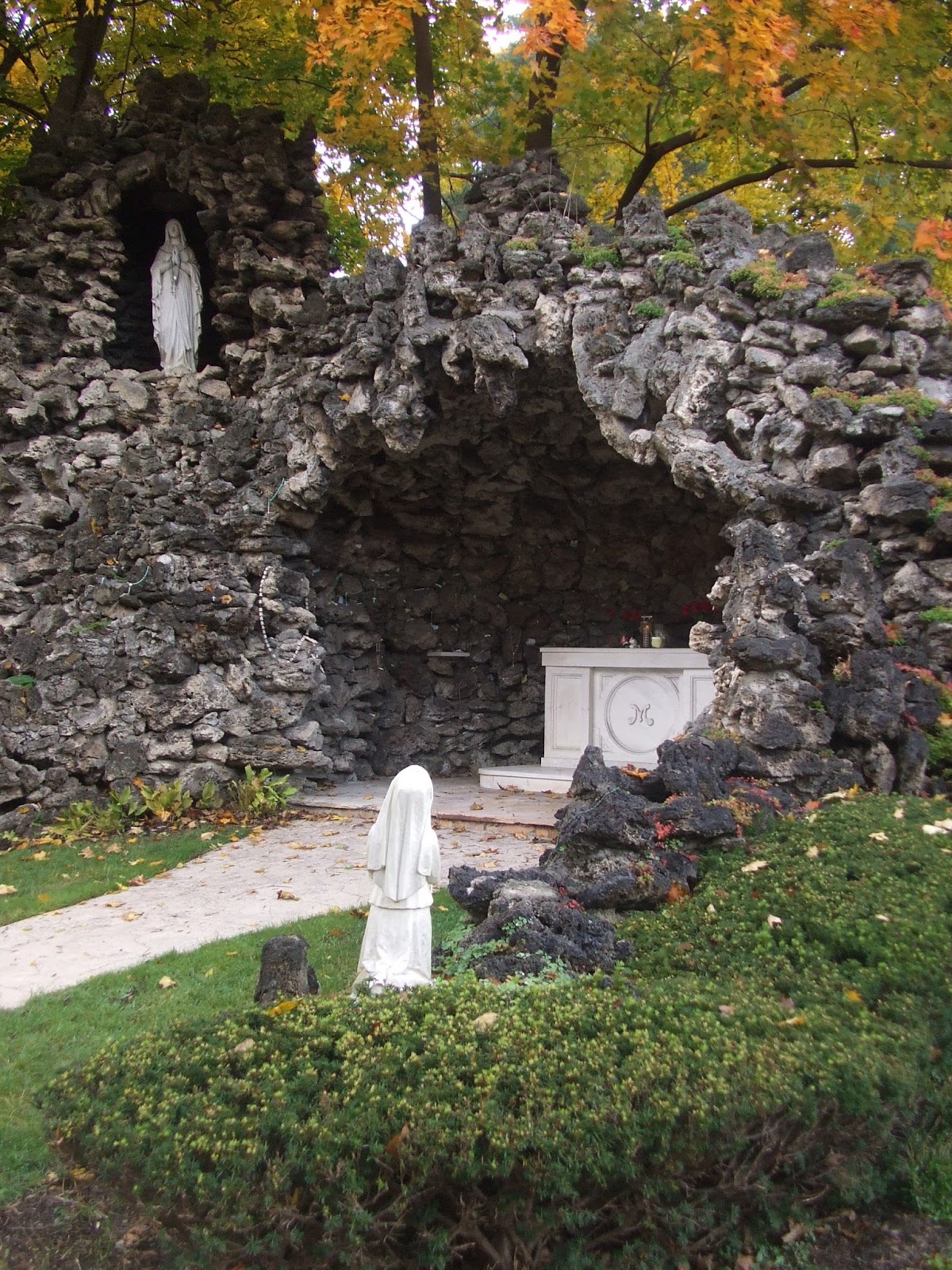
Our Lady of Lourdes grotto with altar
High school "Kairos" retreats became very popular and Manresa began to offer women's retreats in the 1970s. On September 12, 1976, Manresa celebrated its Golden Jubilee with an outdoor Mass, presided by Bishop Walter Schoenherr, with over 1,200 in attendance.
Fr. Werner retired in 1977 and he was replaced by Fr. Eugene Simon, SJ. A second-story chapel was soon added. Our Lady of Manresa, an original statue, was donated by Peter Grande in 1980. A courtyard was added the following year and the main chapel was expanded in 1987.
Our Lady of Manresa standards immediately north of the retreat house
Manresa went through a series of short-term directors until Fr. James Serrick, SJ, arrived in 1995 and remained there for several years. The former pump house, which was powered by a waterwheel, was converted to a small chapel in 2000.
Former pump house, now chapel, on the southern edge of the grounds
The Stations of the Cross were refurbished in 2012; the original Stations were encased in new, granite monuments engraved with a corresponding Gospel quote.
Manresa Retreat House continues to host conference retreats every week, with a capacity of 78 persons per retreat, with a total of 2,600 men and women each year. Individually-directed retreats, Bible studies, Days of Recollection, etc. take place throughout the year.
A brief promo video includes commentary from Archbishop Vigneron
A. A. groups meet regularly at Manresa, once fostered by Fr. Jack Schuett, SJ, who ministered to our A. A. constituency for 21 years. Fr. Francis Daly, SJ, is the current Director of Manresa Jesuit Retreat House while Fr. Peter Fennessy, SJ, is Superior of the community.
Fr. Peter Fennessy, SJ, on Ignatian Spirituality
Daily Mass is celebrated at 8:00am, most weekdays, in the main chapel. On First Fridays, a light breakfast follows Mass.
An abbreviation of the Jesuit motto, "Ad Majorem Dei Gloriam" (For the Greater Glory of God), is inscribed in a chapel window. The "IHS" abbreviation of the Holy Name on a chapel door.
St. Joseph with Child Jesus stands behind a fountain; St. Thomas Aquinas outside the offices.
Resurrected Christ near the main road; a St. Ignatius shrine on the path to the chapel.
A branch of the Rouge River runs throughout the grounds.
There are several areas for private reflection or conversation scattered around the grounds as well as a nature trail.
Manresa publishes two periodicals, both are available online: biannual Manresa Matters and bimonthly Manresa Memos.
A book on the history of Manresa Retreat House, published in 2014, is available at the office.